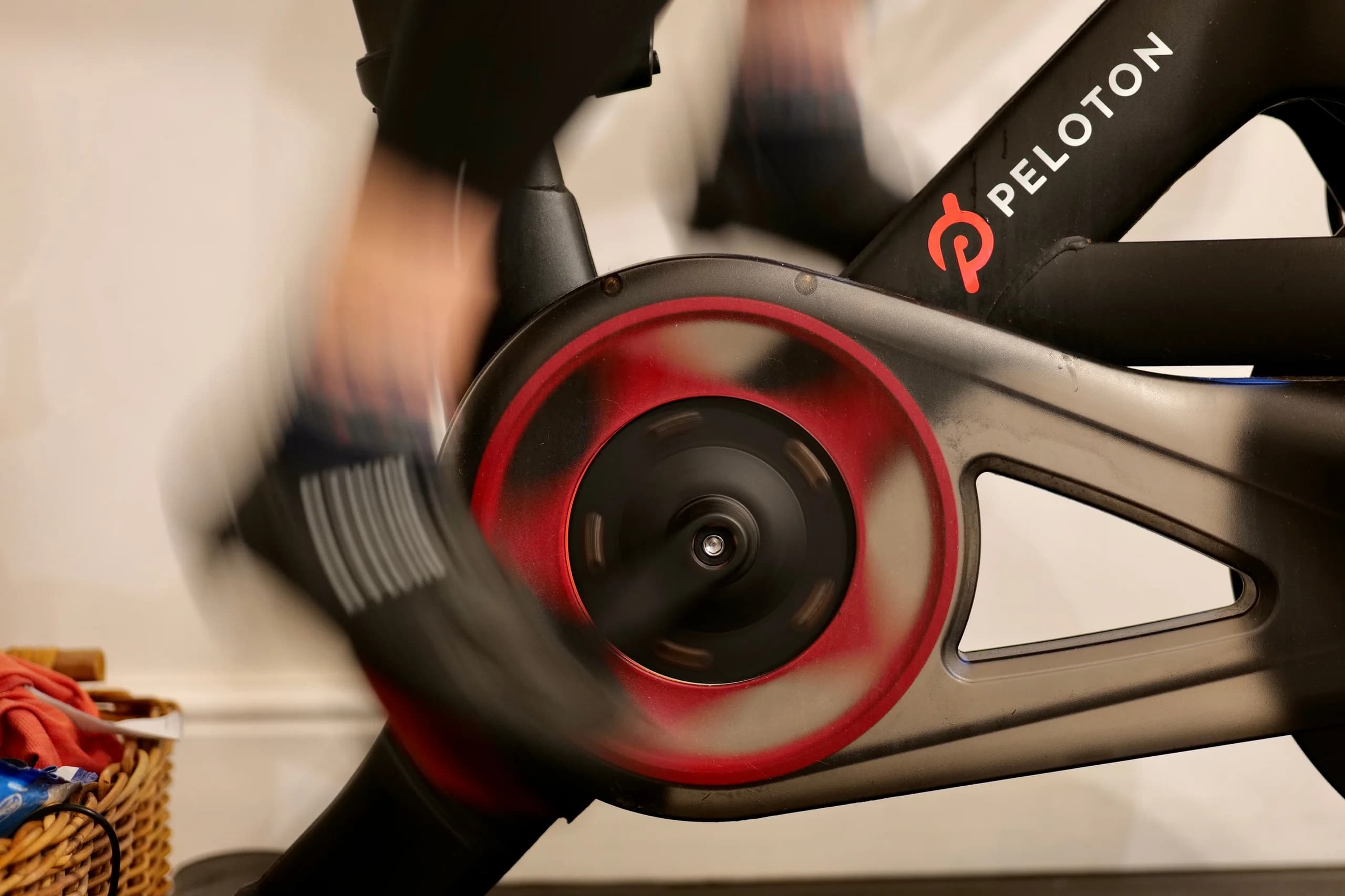
This is the one symptom our bike has actually developed. The resistance reading began sticking and jumping rather than tracking the knob smoothly.
The instinct in that situation is to recalibrate. That instinct runs directly against Peloton's own position.
The original Bike uses a manual resistance system driven by a magnetic brake that is calibrated during manufacturing, and the company's guidance states that generally you should not need to re-calibrate it. Peloton repeats the point in its used-equipment material, flatly: the Bike should not need calibration. The company does allow that over time and with use the brake may require recalibration to restore the factory feel, but frames that as the exception rather than the maintenance rhythm.
More useful than the general position is the specific one. Peloton's calibration documentation names three conditions that, paired with output problems, warrant contacting Member Support for a calibration kit. That is a decision rule, and it converts a vague complaint into something checkable.
The confounders worth ruling out first
Peloton names four things that can make output feel different with nothing actually wrong: seat and handlebar position, shoe clip type, room temperature, and the rider's own strength level. In a two-rider household, the first of those changes constantly — every single ride, in our case, because two people with different inseams share one saddle.
That is the most likely explanation for the majority of "my Peloton feels off" reports, and it costs nothing to eliminate.
There is also a cheap hardware check that sits before any calibration conversation. Peloton stocks a Bike Monitor Cable, listed at $33 as of August 2026, and describes its job as making sure the Bike accurately captures all of your cycling metrics — it runs from inside the frame to the back of the monitor. If the cable carrying the data has degraded, no amount of calibration addresses it.
One structural reassurance is worth knowing before anyone opens the troubleshooting menu. The factory calibration values live on the sensor board and cannot be overwritten. Any custom calibration an owner performs is stored separately on the console, and the factory settings remain available as a restore point. It is difficult to permanently ruin the bike's reference by experimenting.
Worth separating clearly: none of this is a cleaning problem. Peloton's cleaning guidance is about corrosion, and nowhere does the company present wiping the bike down as a remedy for inaccurate metrics. Those are two different systems and two different fixes, and conflating them is the most common error in owner advice on this topic.
When the numbers are genuinely unreliable for a stretch, effort-based and physiological measures fill the gap perfectly well — approaches like the ones behind raising VO2 max at home without a gym do not depend on the console agreeing with you.