Why Does My Melasma Keep Coming Back? What Dermatologists Wish You Knew
Understanding the Chronic Nature of Melasma and How to Keep It in Check
By
Published: July 30, 2026
Updated: July 31, 2026
Credit: Daily Vitality
Key Takeaways
•Melasma is a chronic, relapsing condition, so patches returning is expected behavior, not a sign you did something wrong.
•Everyday sunlight, visible light, heat, and hormones are the triggers most likely to reignite it, which is why protection has to be daily and year-round.
•The realistic goal is long-term management with gentle, consistent care, not a one-time permanent cure.
You did everything right. You found a product that worked, watched those brown patches on your cheeks slowly fade, and finally felt like yourself in the mirror again. Then a sunny stretch of weeks went by, maybe a vacation or just a summer of ordinary errands, and there they were again, creeping back across the same spots you thought you had finally cleared.
If that story feels personal, here is the first thing worth knowing: you didn't fail, and neither did your skincare. Melasma is a chronic condition that tends to relapse, which means coming back is simply what it does when its triggers are still around. Dermatologists treat it less like a stain you scrub out once and more like a long-term relationship you manage over time, closer to how you'd think about eczema or rosacea than a passing breakout.
That shift in mindset changes everything about how you approach it. Once you stop expecting a permanent cure and start thinking about steady, gentle management, the frustration eases and the plan gets clearer. This guide walks through why melasma is so persistent, what quietly keeps reigniting it, and the approaches dermatologists lean on to keep those patches soft and faint for the long haul.
What Melasma Actually Is
A Pigment Pattern, Not a Surface Stain
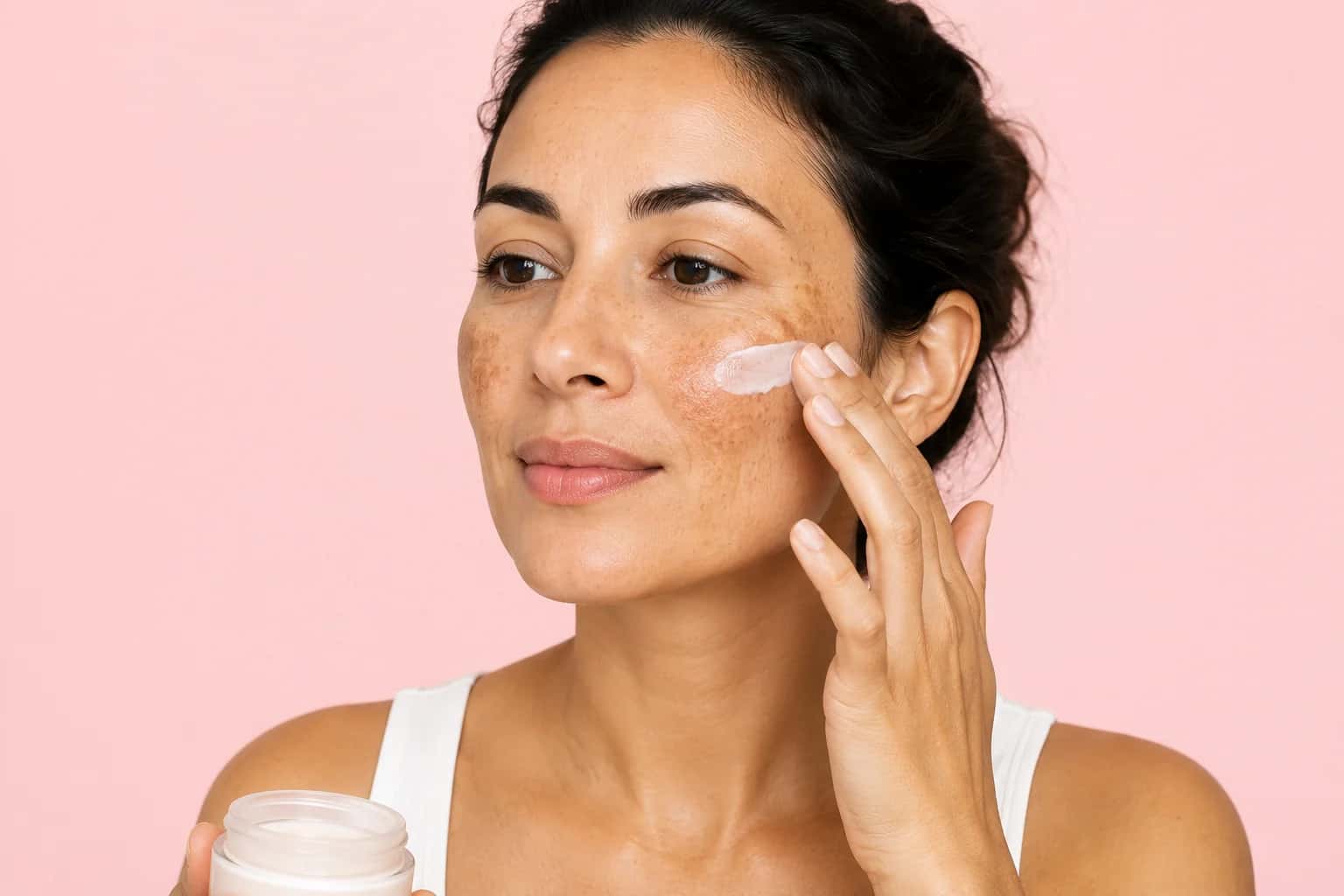
Melasma shows up as irregular brown or gray-brown patches on the parts of your face that catch the most light, usually the cheeks, forehead, bridge of the nose, upper lip, and chin. It happens deeper than a surface mark: pigment-producing cells called melanocytes go into overdrive and make more melanin than they should, according to the American Academy of Dermatology. That's why melasma can feel so stubborn compared to a spot that sits on top of the skin. You're not dealing with something you can buff away; you're dealing with cells that have been switched into a higher gear.
Here's the reassuring part. Melasma will not harm your physical health in any way. What it can affect is how you feel about yourself, and dermatologists take that seriously, recognizing that many people seek treatment for entirely emotional and cosmetic reasons that are completely valid.
To understand what they're working with, dermatologists often examine your face closely and sometimes reach for a specialized tool like a Wood's lamp or a dermatoscope. These help them see how deeply the pigment reaches into the layers of your skin, and that depth is a big clue in shaping which treatments are likely to help.
Who Tends to Get It
Melasma is one of the most common pigment concerns in the world, with studies reporting it in anywhere from roughly 8% to more than 30% of the groups they looked at. It affects women far more than men, with around nine in ten cases occurring in women, and it appears more often in people with medium-to-deep skin tones and in sunny climates. If you have skin that tans easily and you live somewhere the sun rarely takes a day off, you're squarely in the group melasma tends to visit.
Why It Keeps Coming Back
This is the heart of the matter, and it's where the "manage, don't cure" mindset earns its keep. Melasma commonly lasts for years, sometimes a lifetime, and it tends to return whenever its triggers are still in the picture. Understanding those triggers is what turns recurrence from a mystery into something you can actually anticipate.
The Sun Is the Main Character
If there's one driver to know, it's sunlight. Ultraviolet radiation prompts your skin to make more pigment, which both darkens the patches you already have and coaxes new ones to the surface. The AAD is direct about this: sun protection both helps fade melasma and helps keep it from coming back. That's why a lapse in daily protection so often shows up on your face a few weeks later. Those tanning beds and sunlamps deserve a mention too, since the intense ultraviolet light they give off can reignite melasma just as readily as a day at the beach.
The Visible-Light Blind Spot
Here's the piece that surprises almost everyone, and it explains the maddening "but I wear sunscreen and it still came back" experience. It isn't only ultraviolet light that stirs up melasma. Visible light, the ordinary daylight you can see, including the light streaming through your car and office windows, plays a real role too, especially in relapses and in deeper skin tones. Many everyday sunscreens are built to block ultraviolet rays and let visible light pass right through. So you can be diligent with a standard SPF and still leave a door open for the exact wavelengths that keep waking your melasma up.
Hormones Keep Their Own Schedule
Melasma is deeply tied to hormones, which is why it can flare even when your skincare is flawless. Estrogen and progesterone can rev up pigment production, so pregnancy, hormonal birth control, and hormone replacement therapy are all well-recognized triggers for melasma appearing or worsening. Pregnancy is such a common starting point that melasma earned the nickname "the mask of pregnancy," historically called chloasma. Sometimes melasma tied to a pregnancy or a medication fades on its own once that trigger ends, but it can also linger for years afterward, so fading is a hopeful possibility rather than a promise.
When You Stop, It Often Starts
Melasma has a way of rebounding when maintenance stops. Patients frequently relapse after they set their treatment aside, thinking the job is done. One illustration comes from oral tranexamic acid, a prescription option for stubborn cases: research has found that roughly a quarter of patients see their melasma return within about seven months, particularly once treatment ends. The honest takeaway is that maintenance never fully wraps up. Skip your sun protection for a single summer and the patches tend to creep back. In that sense, treating melasma has more in common with an ongoing subscription than a one-time purchase, a dynamic we explore in our piece on why some skin treatments are commitments rather than quick fixes.
The Over-Treatment Trap
It feels logical that if a gentle product helped a little, a stronger one should help more and faster. With melasma, that instinct can backfire. Irritation and inflammation actually push melasma-prone skin to make more pigment, so harsh scrubs, aggressive actives layered on top of one another, stinging products, and even a lot of heat can darken the very spots you're trying to lighten. The AAD's self-care guidance leans toward gentle, fragrance-free products and suggests stopping anything that burns or stings, precisely because that irritation can deepen dark patches. For melasma, patient and gentle tends to outperform strong and fast, and a pared-back routine often serves this skin better than a crowded shelf.
Important
If a product burns, stings, or leaves your skin red and inflamed, that reaction can be actively working against your melasma. Gentle is not a compromise here; it's part of the strategy.
What Actually Keeps It Away: Sun and Light Protection
The Non-Negotiable Foundation
Every conversation about calming melasma circles back to protecting your skin from light, because no cream or procedure performs well without it. For melasma, dermatologists point to a broad-spectrum sunscreen with SPF 30 or higher applied throughout the day, paired with everyday habits like seeking shade and wearing a wide-brimmed hat. It's less about one heroic effort and more about the quiet consistency of doing it every day, cloudy or bright, indoors near windows or out running errands. If your current regimen feels overwhelming, building a simple, steady rhythm like the one in our minimalist skincare routine guide can make that daily consistency far easier to keep.
Why Iron Oxide Changes the Game
Because visible light is part of the story, the type of sunscreen matters as much as the number on the bottle. This is where iron oxide comes in. For melasma specifically, the AAD suggests looking for sunscreens that contain zinc oxide, titanium dioxide, and iron oxide, and notes that tinted sunscreens can do double duty by softening the white cast of mineral filters while adding protection against visible light. Iron oxide is the standout ingredient here, because it helps block the visible wavelengths that ordinary formulas miss.
The evidence backing this is genuinely encouraging. In people with melasma, a sunscreen that guards against both ultraviolet and visible light using pigments like iron oxides produced greater improvement in melasma severity than a comparable ultraviolet-only sunscreen, and tinted iron-oxide formulas have been shown to hold recurrence at bay better than untinted ones of the same SPF. If you've resisted mineral sunscreens because of that chalky cast, a tinted version quietly solves two problems at once, giving you a more natural finish and closing the visible-light gap.
Tip
When comparing sunscreens for melasma, scan the ingredient list for iron oxides. A tinted, broad-spectrum SPF 30 or higher with iron oxide covers both the ultraviolet and visible-light bases in a single step.
The Treatment Ladder Dermatologists Use
Beyond protection, dermatologists draw from a range of treatments, usually layering them and tailoring the mix to your skin tone, how deep the pigment sits, and your triggers. Thinking of it as a ladder helps: everyone starts on the same foundation, and additional rungs get added as needed. The overview below shows how those pieces generally fit together.
Rung
What it involves
Where it fits
Sun and light protection
Daily broad-spectrum SPF 30+ with iron oxide, hats, shade
The foundation under everything else
Prescription topicals
Hydroquinone, triple-combination cream, or gentler options like azelaic acid, kojic acid, vitamin C
Common next step to reduce pigment
Tranexamic acid
Usually an oral prescription for stubborn cases, taken under supervision
Added when topicals and protection aren't enough
In-office procedures
Chemical peels, microneedling, select lasers, platelet-rich plasma
Reserved for resistant cases, board-certified dermatologist only
Camouflage makeup
Cosmetic coverage, ideally with iron oxide
A bridge for confidence while treatment works
Prescription Topicals
Topical medications are often the next rung after protection. Hydroquinone is a long-standing option that works to even out skin tone, and it's worth knowing that in the United States it's no longer sold over the counter, so it now requires a prescription and a dermatologist's guidance. Many dermatologists reach for a triple-combination cream that blends tretinoin, a mild corticosteroid, and hydroquinone, while gentler alternatives like azelaic acid, kojic acid, and vitamin C can help decrease excess pigment for skin that needs a lighter touch.
Tranexamic Acid for Stubborn Cases
When melasma holds on despite topicals and careful protection, dermatologists may consider tranexamic acid, most often as a low-dose oral pill taken twice a day, and typically alongside a triple-combination cream, strict sun protection, and iron-oxide makeup. Dermatology Times describes it as a genuinely useful tool for moderate-to-severe cases, but it's a prescription medication, not a supplement to source on your own.
Warning
Oral tranexamic acid isn't right for everyone. Because it can raise the risk of blood clots in susceptible people, dermatologists review your medical history first, and anyone with a history of clotting should make sure their doctor knows before it's ever considered.
In-Office Procedures
For pigment that stays visible despite everything else, dermatologists sometimes add in-office procedures such as chemical peels, microneedling, selected laser or light treatments, or platelet-rich plasma. There's an important catch that separates a good outcome from a setback: these treatments belong in the hands of a board-certified dermatologist, because the wrong device or setting can actually worsen melasma rather than help it. That risk is exactly why the fantasy of a single "laser and done" fix doesn't match reality. If you're weighing this route, our guide to matching laser treatments to specific skin concerns is worth reading before you book anything.
Camouflage Makeup as a Bridge
Makeup gets its own honorable mention, because covering uneven tone while treatment slowly works can be a real boost to how you feel day to day. Dermatologists generally suggest a specific order to get the most from it: melasma medication first, then sunscreen, then camouflage makeup on top. Choosing a product with iron oxide adds a little extra visible-light defense to the mix.
Setting Realistic Expectations
Patience is part of the protocol, not a consolation prize. When people follow a dermatologist-directed plan, results typically take somewhere between three and twelve months to show, and longer if the melasma has been there for years. Pigment fades slowly, so the absence of overnight change isn't a sign that something's wrong. Leaning on ingredients with a strong track record, like those covered in our guide to the skincare ingredient with the most science behind it, can make that slow climb feel more worthwhile.
It also helps to hold the right definition of success. The goals of treatment are to dial down how much pigment your skin makes and to even your tone back toward its natural color, rather than to erase melasma permanently. Softer, fainter, well-controlled patches are a realistic and worthwhile win.
One practical note worth raising early: because melasma treatment is considered cosmetic rather than medically necessary, most insurers don't cover it. Asking about cost up front can save you an uncomfortable surprise and help you plan a routine you can actually sustain, since consistency over time is what keeps melasma quiet.
When to See a Dermatologist
If your patches persist, keep returning, or simply bother you enough to affect your confidence, that's reason enough to see a board-certified dermatologist. A visit does two valuable things: it confirms that what you're seeing is actually melasma and not another condition that can look similar, and it opens the door to prescription treatments and procedures matched to your skin tone, the depth of your pigment, and your particular triggers. Melasma shares the stage with plenty of other conditions that keep coming back for their own reasons, much like the pattern we unpack in our article on why urinary tract infections recur and what genuinely helps prevent them — a reminder that "chronic and recurring" doesn't mean "unmanageable."
About the Author
Angela Nightingale
Senior Editor
Angela Nightingale is a Senior Editor at Daily Vitality with over two decades of experience in digital publishing and health and wellness content. She specializes in turning complex, often-confusing health topics into clear, calm, and practical guidance that respects the reader's intelligence. Her work focuses on helping people feel informed and confident — never overwhelmed or alarmed — as they make everyday decisions about how they eat, move, rest, and age.
Melasma is a chronic, relapsing condition, so it tends to return whenever its triggers are still present, most often sun exposure, visible light, hormones, or heat. Recurrence usually reflects an active trigger rather than a product that stopped working, which is why ongoing protection matters as much as any single treatment.
Many everyday sunscreens block ultraviolet light but let visible light through, and visible light can trigger melasma too, particularly in deeper skin tones. A tinted, broad-spectrum sunscreen containing iron oxide helps cover that gap by adding protection against visible wavelengths.
For most people, no. Dermatologists frame melasma as something to manage rather than cure, with the goals being to reduce pigment production and even out skin tone. Well-controlled, faint patches are a realistic outcome, and maintenance is what keeps them that way.
Sometimes. Melasma triggered by pregnancy or a medication can fade once that trigger ends, but it can also persist for years, so fading is a possibility rather than a guarantee. A dermatologist can help if it lingers.
Irritation and inflammation can push melasma-prone skin to make more pigment, so aggressive products or procedures can sometimes darken patches instead of lightening them. Gentle, consistent care tends to work better, and stronger is not always faster.
When following a dermatologist-directed plan, results usually appear within three to twelve months, and it can take longer if melasma has been present for a long time. Slow, steady improvement is the norm.
Oral tranexamic acid for melasma is a prescription medication used under a dermatologist's supervision, not a supplement to source on your own. It isn't suitable for everyone, and people with a history of blood clots in particular need medical screening first.
Not really. Lasers and light treatments can help in the right hands, but the wrong device or setting can worsen melasma, so they're considered an add-on performed by a board-certified dermatologist rather than a one-and-done solution.
Heat is an under-appreciated trigger alongside ultraviolet and visible light, which is why some people notice flares in hot conditions even with sun protection. Managing heat exposure can be a helpful part of an overall plan.
Sources
American Academy of Dermatology. Melasma: Diagnosis and Treatment. Retrieved from https://www.aad.org/
American Academy of Dermatology. Melasma: Overview. Retrieved from https://www.aad.org/
American Academy of Dermatology. Melasma: Self-Care. Retrieved from https://www.aad.org/
Show 6 more sourcesHide additional sources
American Academy of Dermatology. Managing Melasma (Dermatology World). Retrieved from https://staging.aad.org/
Ogbechie-Godec, O. A., & Elbuluk, N. (2017). Melasma: An Up-to-Date Comprehensive Review. Retrieved from https://pubmed.ncbi.nlm.nih.gov/