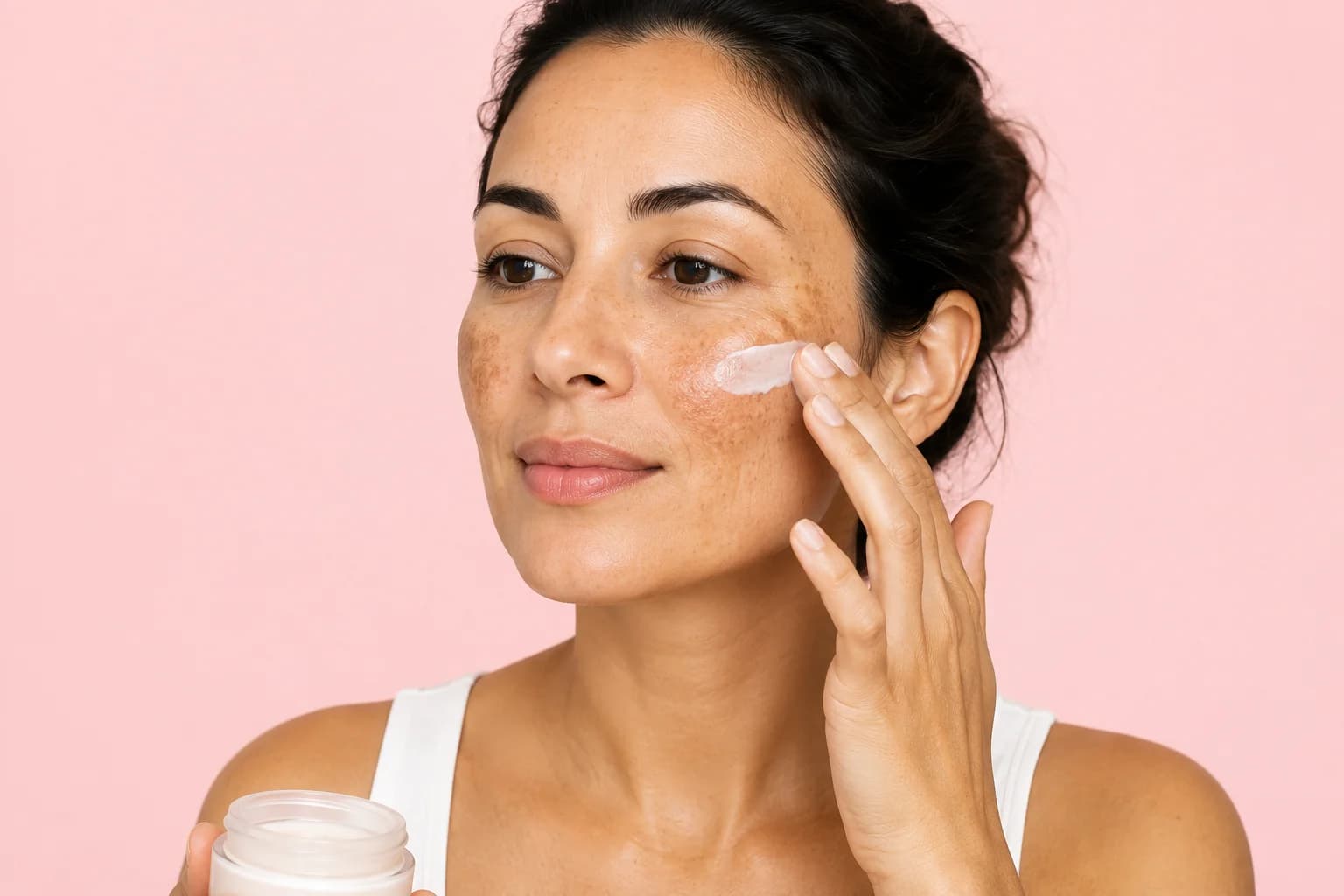
If you have ever leaned toward the mirror and traced a soft brown patch across your cheek or upper lip, you already know how quietly persistent melasma can be. It shows up as symmetric, brown-to-gray patches on sun-exposed areas of the face, most often the cheeks, forehead, nose, and upper lip, and it tends to deepen in summer and fade in winter only to return. It is one of the most common pigment concerns people bring to a skincare shelf, and also one of the most misunderstood.
Here is the honest framing that shapes this entire guide: melasma is chronic and relapse-prone, which means topical products are there to manage and soften it rather than erase it for good. The patches form when pigment-producing cells called melanocytes go into overdrive, depositing extra melanin in the skin. Sunlight, visible light from screens and windows, heat, and hormones such as pregnancy or oral contraceptives can all switch that overproduction back on. So the goal is not a miracle cream. The goal is a smart, consistent routine you can actually keep.
That is also why sun protection threads through every single recommendation below. A brightening active works against the pigment already there, but ultraviolet and visible light keep signaling your skin to make more. Without daily, broad-spectrum, ideally tinted sun protection, even the best cream is trying to fill a bathtub with the drain wide open. Think of sunscreen as the true first product on this list, and everything else as support.
To build the ranking, we scored each product on the qualities that matter most for real-world melasma: how strong the evidence is, how potent the active ingredients are, how gentle the formula feels over months of use, how much value it offers, and how easy it is to get. Then we counted down from a gentle, budget-friendly starting point at number ten all the way to the prescription gold standard at number one. Wherever a product sits, remember that pigment fades slowly, and the people who see the most change are usually the ones who give a routine time.