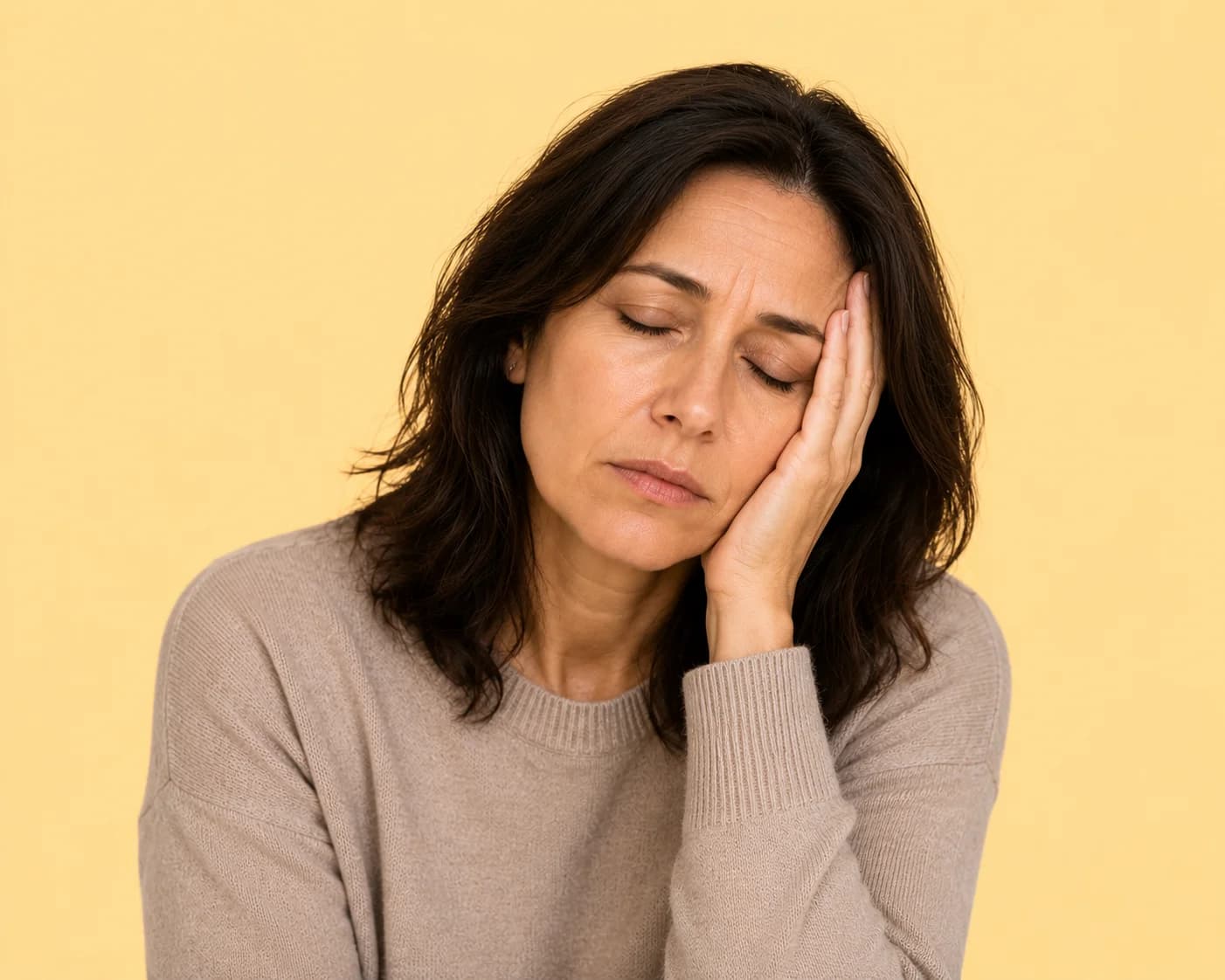
A heartbeat that suddenly feels faster, stronger, fluttery, or simply more noticeable than usual can be an unsettling perimenopause symptom — partly because the heart is involved, and anything involving the heart tends to grab our attention. You might feel a brief pounding, a skipped-beat sensation, or a racing pulse that arrives alongside a hot flash or a wave of anxiety, then settles on its own.
These palpitations are thought to be tied to the same hormonal shifts and vasomotor activity behind hot flashes. When blood vessels dilate and your body works to shed heat, your heart rate can tick up, and fluctuating estrogen may also influence the nervous system signals that govern heart rhythm. Stress and disrupted sleep, both common in this stage, can add to the effect.
For many women, occasional palpitations during the transition are benign and closely linked to their hot flashes or anxious moments. Cutting back on caffeine, alcohol, and nicotine, staying hydrated, and using calming, slow-breathing techniques when a wave hits are things people commonly try.
This is one symptom, though, where it's genuinely worth looping in a clinician rather than assuming it's "just perimenopause." New, frequent, or prolonged palpitations — especially if they come with chest pain, breathlessness, dizziness, or fainting — should be evaluated, because the heart deserves that due diligence. Getting it checked isn't overreacting; it's simply ruling out other causes so that, if it is hormonal, you can feel reassured.