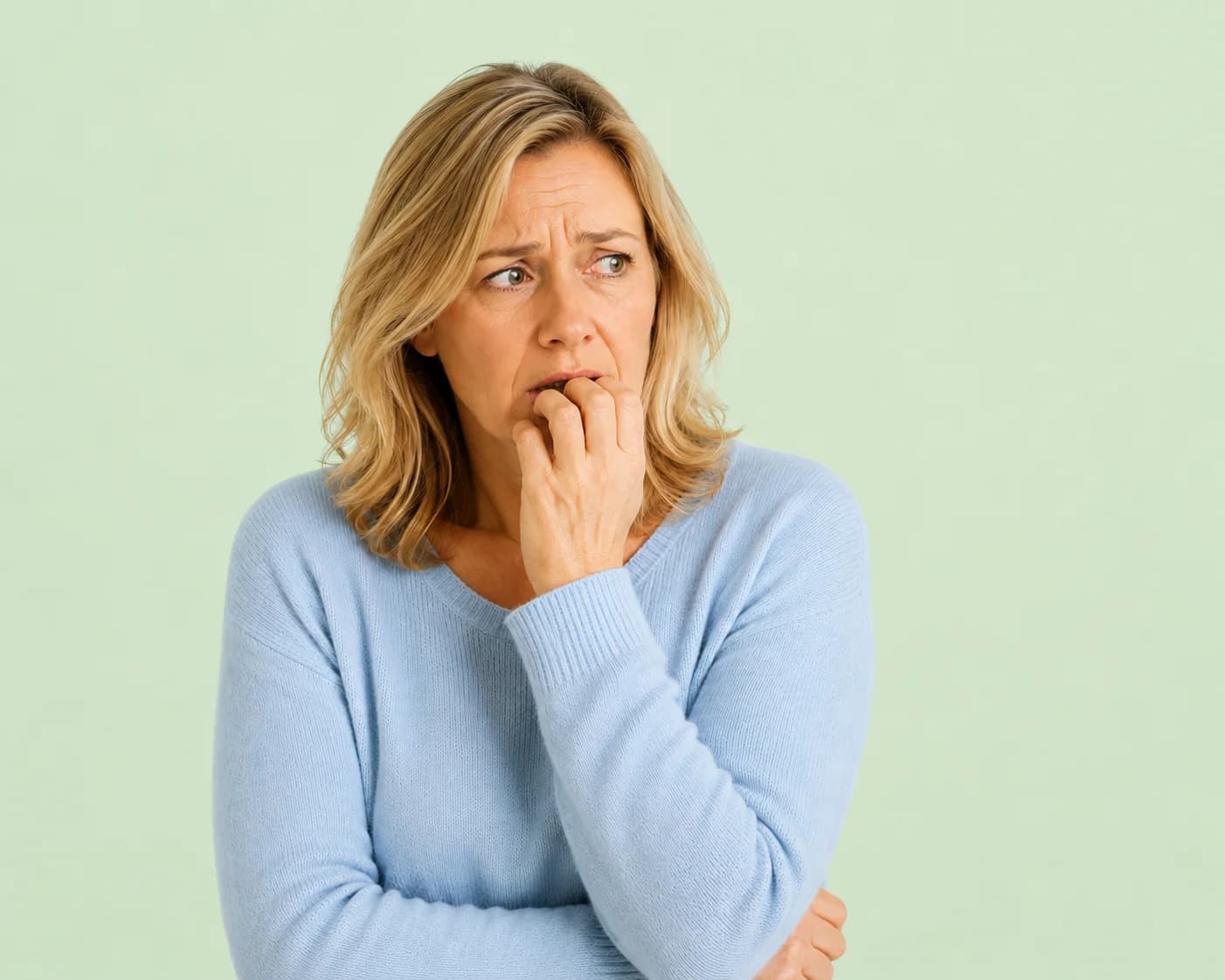
A lot of relief starts with the ordinary, unglamorous basics — not because they're a cure, but because they give your nervous system steadier ground to stand on. Johns Hopkins points to regular exercise, a healthy diet, enough sleep, and stress-management practices like yoga or meditation as approaches that can lift mood and take the edge off anxiety. None of these have to be dramatic to count; a short daily walk and a few minutes of slow breathing are a real start.
Sleep, unsurprisingly, is worth its own attention. The kinds of habits that protect it — a consistent sleep and wake time, a cool and dark bedroom, easing off screens before bed, and going lighter on afternoon caffeine — are the same ones the Mayo Clinic groups among low-risk ways to steady mood and reduce stress, alongside mindfulness, yoga, and relaxation techniques.
Easing back on caffeine and alcohol tends to come up often, too; the Cleveland Clinic notes that both can trigger hot flashes and disrupt sleep, which can feed the anxiety loop.
If meditation feels intimidating, it doesn't need to be — our beginner's guide to meditation for anxiety is a gentle place to begin.
The table below pairs some of the common drivers of perimenopausal anxiety with options many women find helpful — a quick reference you can keep in mind rather than a set of instructions.
When anxiety spikes, a few minutes of slow, extended exhales can signal safety to your nervous system. It won't erase the feeling, but it can take the sharpest edge off while it passes.
Talk therapy is another well-supported route. Cognitive behavioral therapy, in particular, is recognized for helping people recognize and reshape the anxious thought patterns that keep worry spinning, and it can be especially useful for the nighttime anxiety that turns into insomnia.