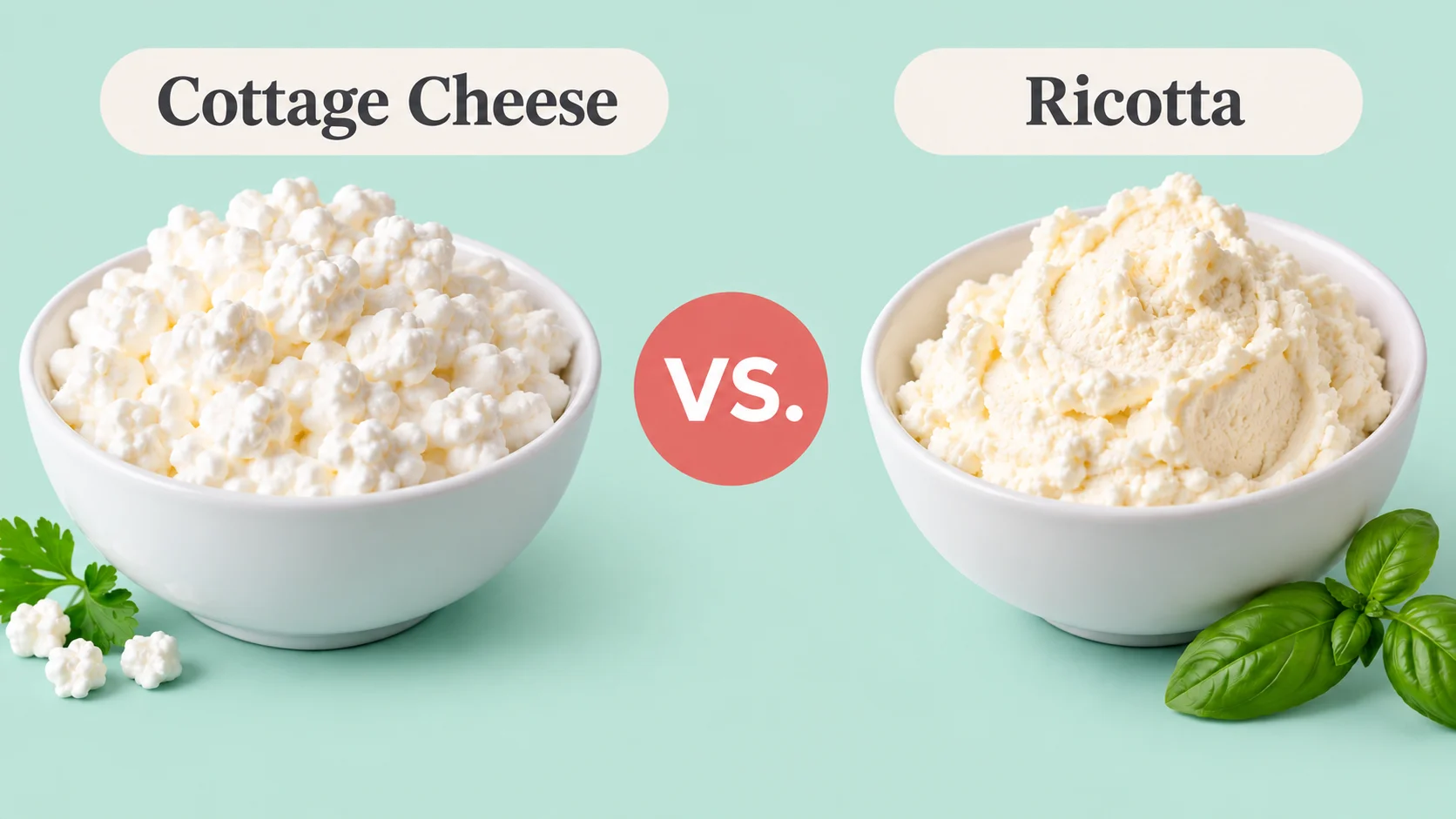
Every generic value in this article comes from USDA FoodData Central, using SR Legacy and Foundation Foods records rather than branded label data, and each one was read through the database's abridged nutrient endpoint so the figures are the ones USDA publishes rather than anything reinterpreted along the way. You can pull up the 1% cottage cheese record at fdc.nal.usda.gov and check the numbers below against it directly.
Everything is normalized to 113 grams, a half cup. This matters more than it sounds like it should. Ricotta packages in the United States commonly declare a 62-gram quarter-cup serving while cottage cheese declares a 113-gram half cup, so reading the two Nutrition Facts panels side by side in the aisle understates ricotta's figures by roughly half before you have compared anything at all. Cottage cheese has its own version of this problem, with branded servings running anywhere from 110 to 170 grams, which means a product can look like it leads the category on protein purely because its cup is larger.
Two disclosures belong here rather than buried at the end. First, there is no clean USDA record for the fat-free creamed cottage cheese that actually sits on American shelves. The only nonfat entry in the database is dry-curd, uncreamed cottage cheese, which is a genuinely different product with no dressing added back. We used it as the nearest available record and have marked it in the table, but it is a substitution, not a match. Second, USDA's own two records for full-fat cottage cheese disagree with each other: the 2019 entry reads 315 mg of sodium per 100 grams from a back-calculated label claim, while the 2022 analytical measurement reads 350 mg. The newer measured figure is the better one, and the 11 percent gap between them is a useful reminder that a generic number describes a category, not the specific tub in your hand.
Because of that, we held to a materiality threshold throughout. FDA label rounding tolerances mean small differences between products may not be real, so we treat a protein gap under 1 gram or a sodium gap under 25 milligrams per serving as noise rather than a finding. The differences discussed below are all comfortably larger than that.