You've probably noticed how often the word inflammation shows up in health headlines lately, usually attached to a long list of things you're supposedly doing wrong. That can leave you with the impression that inflammation is some shadowy, all-purpose villain. The truth is more interesting. Some inflammation is genuinely useful — the immediate, fiery response your immune system mounts when you twist an ankle or fight off a flu. That kind comes on quickly, does its job, and resolves.
The kind worth paying closer attention to is quieter. It's a low, persistent hum of immune activity that doesn't shut off when it's supposed to — what researchers call chronic low-grade inflammation. It has been linked to higher risk for cardiovascular disease, type 2 diabetes, several cancers, and a handful of conditions that arrive slowly over decades. You usually can't feel it. Doctors sometimes measure it through a blood marker called C-reactive protein, or CRP, which rises when systemic inflammation is elevated.
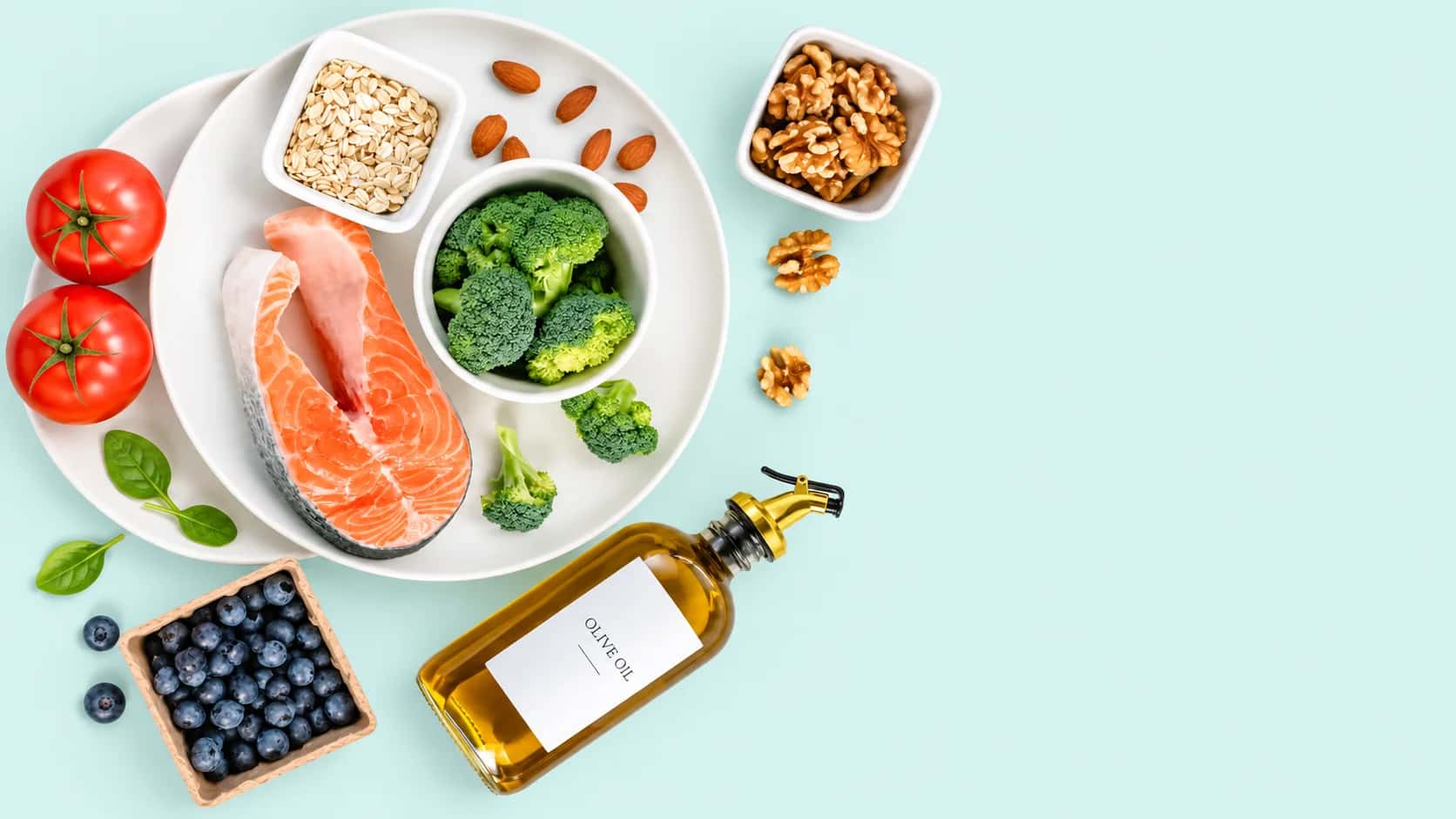
Diet alone won't undo it. Sleep, regular movement, body composition, stress, and how much you smoke or drink all matter — sometimes more than what's on your plate. But food is one of the most accessible levers you have, and the research on which foods help is more settled than the headlines suggest. The seven below show up consistently in clinical trials and cohort studies as part of dietary patterns that lower inflammatory markers. None of them is a miracle. Together, eaten regularly, they form the backbone of an eating style that the strongest evidence supports.
Below, you'll find what each food does, what the research actually shows, and how much of it tends to appear in the studies. Some have very strong evidence (fatty fish, extra virgin olive oil). Some have strong but more variable evidence (berries, walnuts, leafy greens). And a couple — tomatoes and green tea — have promising but more mixed data. You'll see those distinctions called out as we go. Here's a snapshot before the details: