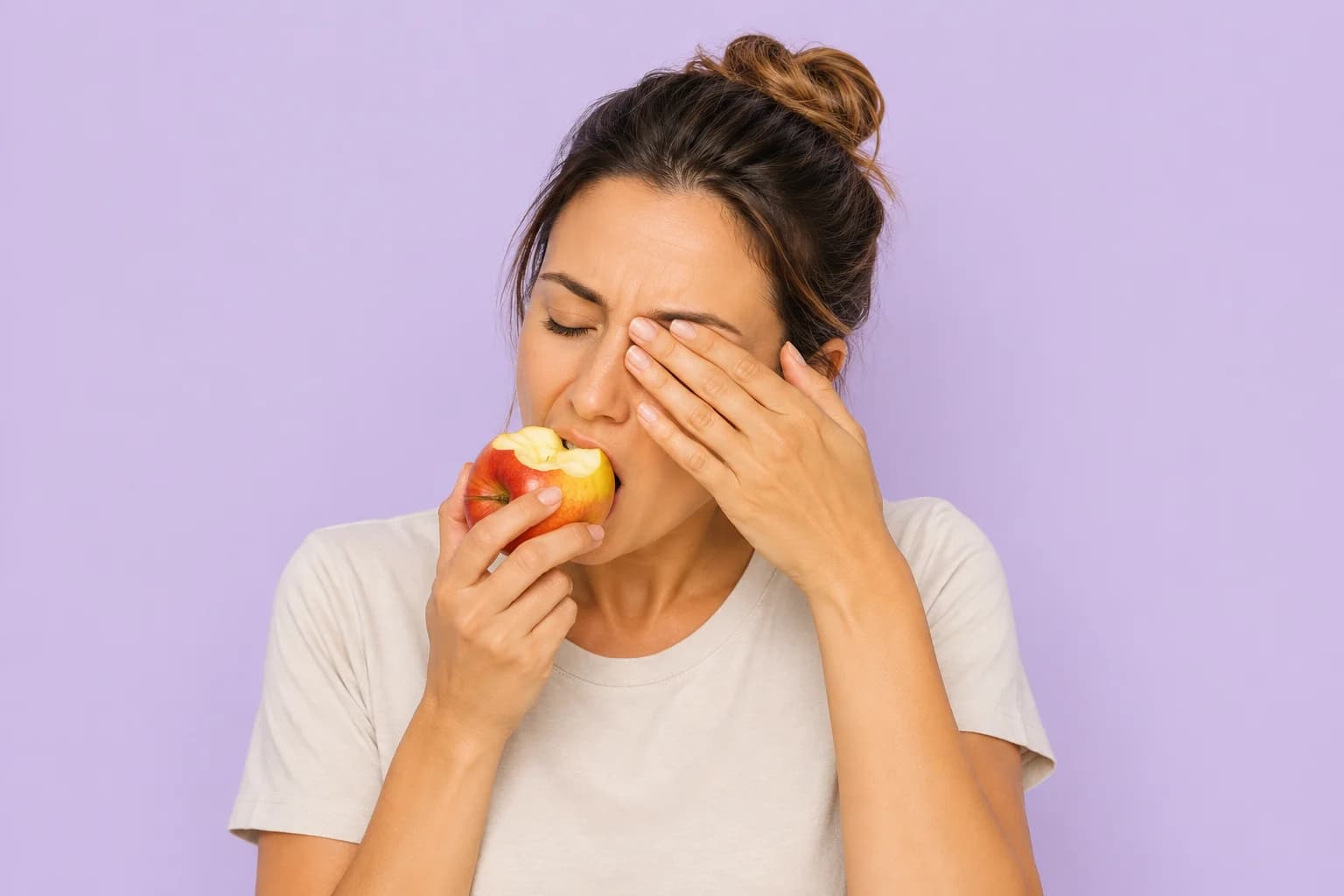
You closed the windows. You took your antihistamine before breakfast. You even changed out of your pollen-dusted clothes the second you walked in the door. And yet, here you are, still sniffling and scratchy-eyed by mid-afternoon. Before you blame the oak tree in the yard, it might be worth glancing at your lunch, because what is on your plate can quietly turn the volume up on hay fever in ways most people never connect to food.
There are two well-documented reasons this happens, and neither one means you have a hidden food allergy in the classic sense. The first is a case of mistaken identity. In people with pollen allergies, the immune system can confuse the proteins in certain raw fruits and vegetables with the proteins in pollen, which sets off a localized reaction the American College of Allergy, Asthma & Immunology calls pollen food allergy syndrome, also known as oral allergy syndrome. Your body basically sees a bite of raw apple and reacts as if you just inhaled a lungful of birch pollen.
The second reason comes down to histamine, the same compound that drives the itching, swelling, and runny nose you already associate with allergies, as Cleveland Clinic explains. Some foods are naturally rich in histamine, and others nudge your body into releasing more of its own. During allergy season your histamine levels are already elevated from all that pollen, so a histamine-heavy meal is more likely to tip you over the edge than the very same meal would in the dead of winter. Think of it like a bucket that is already three-quarters full: it does not take much to make it overflow.
Here is the reassuring part. Most of these reactions are mild, and almost none of them require you to swear off healthy foods forever. This is not another round of scary food rules or nutrition myths to memorize. The fixes are refreshingly practical, from cooking or peeling a fruit to simply being choosier about timing during peak pollen weeks. Below are twelve common foods worth keeping an eye on, why each one can stir up symptoms, and the easy swap or tweak that usually lets you enjoy it anyway.
One quick note before we dig in: which foods matter most for you depends on which pollen you react to. The table below is a handy cheat sheet, and you will see these pairings echoed throughout the list.