Every fall, you'll likely see a figure for how many pounds of pumpkin the average American "eats." The number comes from the USDA Economic Research Service, and the most recent version is in the ERS Vegetables and Pulses Yearbook, updated September 10, 2026. It puts per-capita pumpkin availability at 5.19 pounds in 2025, a preliminary figure measured at farm weight.
The 25-year trend
Source: USDA ERS, Vegetables and Pulses Yearbook, Table 34 (updated September 10, 2026). Pumpkins, all uses.
The long-term direction is upward. ERS notes that availability averaged about 6 pounds per person from 2022 to 2025, compared with about 4 pounds from 2001 to 2004. The sharp dip in 2015 followed poor growing weather in Illinois, and 2022 set the high point of the series at 6.42 pounds.
You may also come across a figure of 5.62 pounds for 2022. That comes from an older ERS food availability spreadsheet last updated in December 2023, which stops at 2022. The Yearbook replaces it, runs through 2025, and revises several earlier years upward.
How "availability" is built
It helps to know what goes into the number. ERS starts with production, and for pumpkins it scales up the NASS survey to cover the whole country, which lifts 2025 production to about 1.87 billion pounds, roughly 28% above NASS's surveyed total. It then adds imports (about 114 million pounds in 2025, up from 18 million in 2002) and subtracts exports (about 26 million). It subtracts another 10% of production to account for feed use, shrink, and loss. What's left, about 1.77 billion pounds, is divided by the US population.
That makes it a supply measure. It tracks how much pumpkin moved into the domestic market, not how much anyone swallowed. And the production figure at the very top, in ERS's own words, "includes fresh, ornamental, and processing uses."
So how much of it is food?
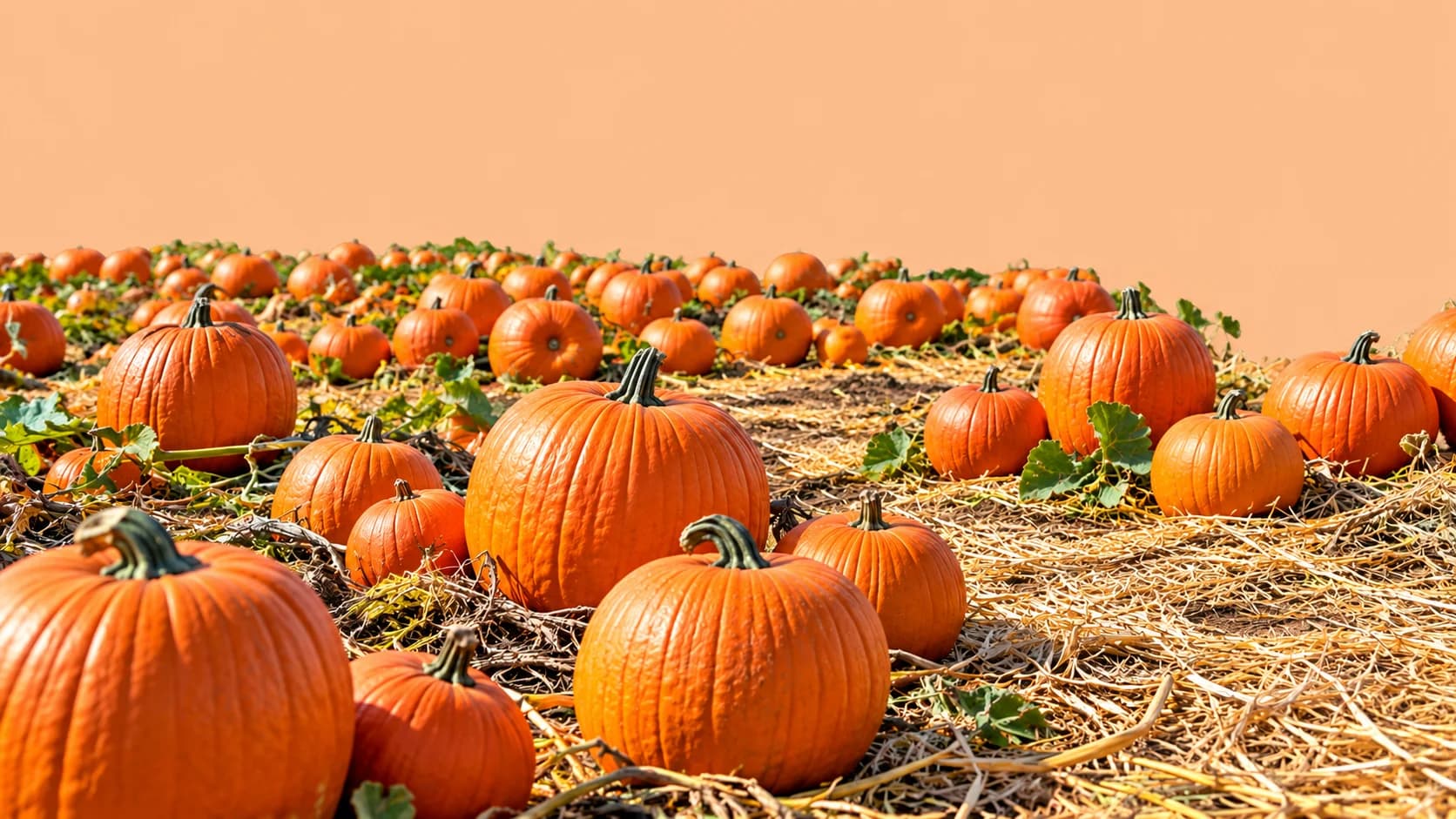
Here is where the figure gets a bit slippery. The 5.19 pounds per person counts every pumpkin that entered the market, including the one carved into a grin and the ones stacked by the mailbox. No federal dataset separates decorative pumpkins from eating pumpkins.
We can still sketch a rough outline. Applying the 2025 NASS split between fresh market and processing to the ERS total suggests that about 1.7 pounds per person went to processors, the pumpkin that becomes canned puree and pie filling. The other 3.5 pounds or so went to the fresh market, where decorations and jack-o'-lanterns share space with the pie pumpkins people cook. Take out 30% for seeds, rind, and stem, and that fresh share carries at most about 2.4 pounds of flesh, some of which ends up on a compost pile rather than a plate.
This split is an approximation. ERS scales production beyond the states NASS surveys, and the loss deduction is a flat estimate. Still, it shows why "Americans eat 5 pounds of pumpkin a year" overstates the case. A more accurate reading is that about 5 pounds of pumpkin per person moves through the market, and a meaningful share of it is décor.
If you want an estimate at retail weight, ERS's older food availability system converts fresh pumpkin from farm weight to retail weight with a factor of 0.90. Applied to 2025, that gives about 4.7 pounds per person, a figure ERS itself hasn't published.
These per-capita figures are national averages of supply, not measurements of what individual people eat. A household that carves three pumpkins and never cooks one still counts toward the average.